
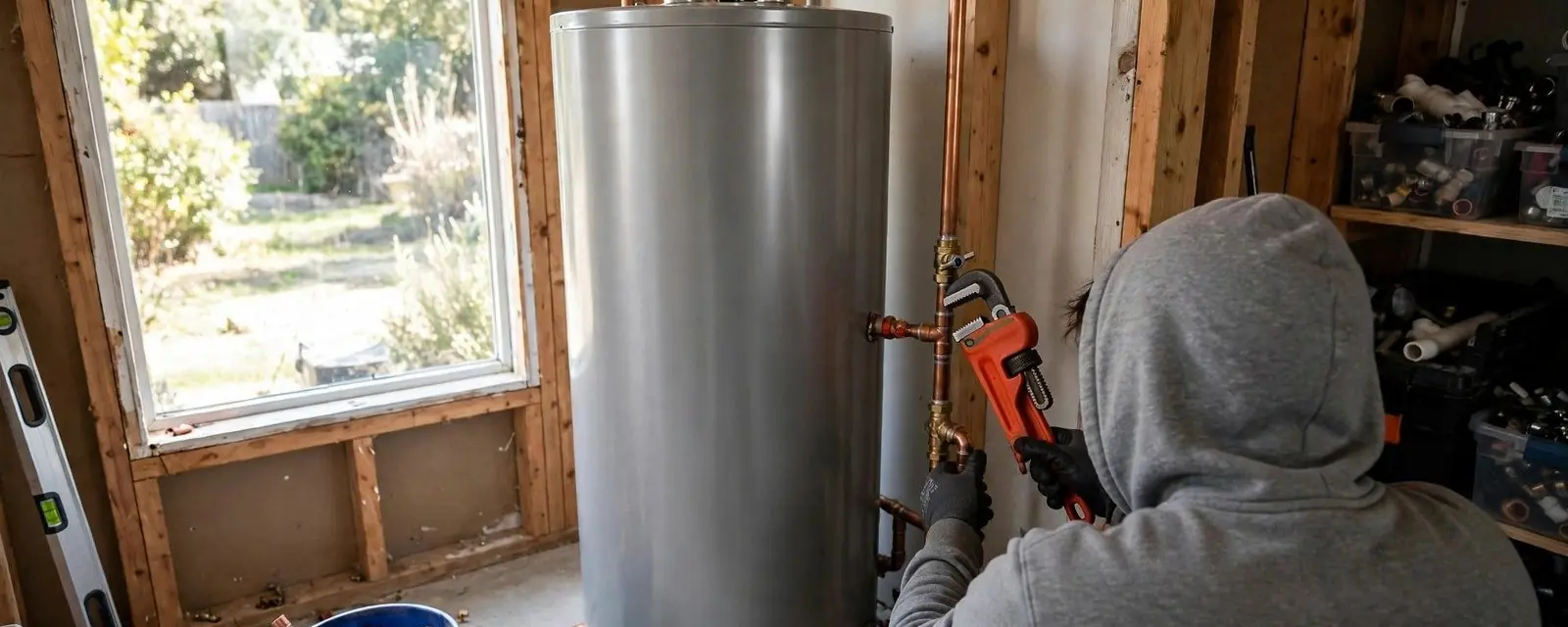
If your gas heater is leaking, shut off the cold water and the gas, then call. If you smell gas, leave the house first and call your gas utility or 911 from outside.
The six parts of a gas water heater install
What a correct install includes
- A tank sized for your household and rated for your fuel
- A gas line with a shutoff valve, a union and a sediment trap
- A vent that rises, slopes upward and ends outside through an approved cap
- Enough combustion air, especially in a closet or small room
- A temperature and pressure relief valve with a discharge line to a safe spot
- Straps that brace the tank against a quake
Each part has a reason. The sediment trap catches debris before it fouls the gas valve. The vent carries exhaust gases out of the house. The relief valve opens if pressure or temperature rises too high. The straps keep the tank upright if the ground moves, and a tank that tips can tear gas and water lines.
Venting is the part people get wrong
A gas heater burns fuel, and the exhaust has to leave the house. A vent that sags, leaks or runs too long can let carbon monoxide into the living space. Old vents also rust through at joints. If you are replacing an old tank, inspect the whole vent run and replace any section that is corroded or loose.
Install a carbon monoxide alarm near the heater and near the bedrooms. It is a small cost for a real safety margin, and many inspectors expect to see one. If your alarm is more than a few years old, replace it.
A rushed install
- Reuses a rusted vent
- Skips the sediment trap
- Leaves the relief line short or capped
- Misses the straps
A correct install
- Replaces corroded vent sections
- Adds a sediment trap and a union
- Pipes the relief valve to a safe drain
- Straps the tank to the wall studs
Size and recovery for a desert household
Tank size follows the number of people and how they use hot water. A small household may do well with a smaller tank, and a family that showers back to back needs more capacity. Gas heaters recover faster than electric ones, which helps in a busy home. A larger tank takes more space and costs more to heat when idle.
Garages are common here, and heat in a garage affects efficiency in summer. The unit also needs protection from vehicles. A raised stand and a guard post keep a gas pilot away from spilled fuel, and we discuss placement before we set the tank.
Desert Hot Springs: permits and the fault line
The City of Desert Hot Springs Building Division issues plumbing permits and can be reached at (760) 329-6411. Water heater installations are commonly inspected, so ask the division whether your job needs a permit before you start. We can walk you through what the inspector looks for.
The city also sits along the Mission Creek Fault, a branch of the San Andreas. That is why bracing matters here, and why we check the straps and the flexible gas connector on every install. A strapped tank is less likely to tip and break a line in a quake.
Venting, relief valves and gas connections follow the California Plumbing Code, which is based on the Uniform Plumbing Code (UPC), and the heater maker instructions control anything the code leaves open.
Want a gas heater plan and a price?
Call and we will talk through your home and give a clear price before work starts.
Gas heater or electric: the short version
| Fuel | Strength | Watch for |
|---|---|---|
| Gas | Fast recovery and lower running cost in many homes | Needs a vent, a gas line and combustion air |
| Electric | Simple venting and easy placement | Needs a dedicated circuit and may recover slower |
| Heat pump | Very efficient | Needs space and airflow, and cools its room |
If you are switching fuels, the cost of running a new gas line or circuit often matters more than the heater itself. We look at your meter, your panel and your layout before we recommend a change. For a tankless option, see our tankless water heater page.
What to ask a plumber before you hire one
- Will you replace or inspect the vent, and who is responsible if it fails inspection?
- Does the price include the relief line, the straps and the permit?
- Will you haul away the old tank?
- What does the warranty cover, and who files the claim?
- Can I see your contractor license number on the California Contractors State License Board site?
If the heater is leaking now, our emergency replacement page explains how we handle a failed tank, and the 24/7 line is open. We also serve Palm Springs and nearby communities, and the service area page lists them.
What the installer should leave you with
When the job is done, you should know where the gas shutoff, the cold water shutoff and the relief valve are. You should also have the model and serial number, the date of install and the warranty paperwork. Take a photo of the data label and keep it with your home records.
Ask the installer to show you how to set the temperature. A setting around 120 degrees Fahrenheit is common for homes with children or older adults, since it lowers the risk of scalds. A higher setting gives more usable hot water but needs care.
It is commonly treated as permitted work. Call the City of Desert Hot Springs Building Division at (760) 329-6411 to confirm for your case.
A straight replacement often takes a few hours. Changing the vent, moving the heater or adding a gas line takes longer.
It helps where a leak could damage finished space, such as an attic or a closet over a floor. We install a pan and a drain line where the location calls for it.
Yes. A working alarm near the heater and near bedrooms is a basic safety step for any home with gas appliances.
Bracing is standard practice in earthquake country and the city sits along the Mission Creek Fault. We strap every tank we set.