Your main sewer line collects every drain in the house and carries it to the street or to a septic tank. A blockage there shows up as multiple fixtures draining badly at the same time, and it needs a machine, not a plunger.
Main line blocked right now
If water is coming up in the lowest tub or floor drain, stop using water and call our 24/7 line. Nights, weekends and holidays are answered the same way. While you wait, keep the washer and dishwasher off and do not flush.
Before the plumber arrives
- Stop the dishwasher, washer and any running shower
- Clear a path to the cleanout, usually outdoors near the house
- Move rugs and valuables away from the lowest drain
- Note which fixtures are affected and when it started
- Photograph any standing wastewater for your insurer
How a main line gets blocked
Grease and wipes build up in the pipe, then paper catches on them and a plug forms. Roots enter joints looking for moisture and grow into a mat that nets everything passing by. Old pipe sags between supports and holds a pool that collects debris, which is why the same line fails again and again.
The fix depends on the cause. A greasy plug responds to a machine cable and then a jet. A root mat needs a cutting head and a camera to check the joint. A sagging section needs repair, which is covered under sewer line repair.
Our process from cleanout to confirmation
Locate and open the cleanout
We pull the cap slowly. Water at the cleanout tells us the blockage is downstream of the house.
Cable the line
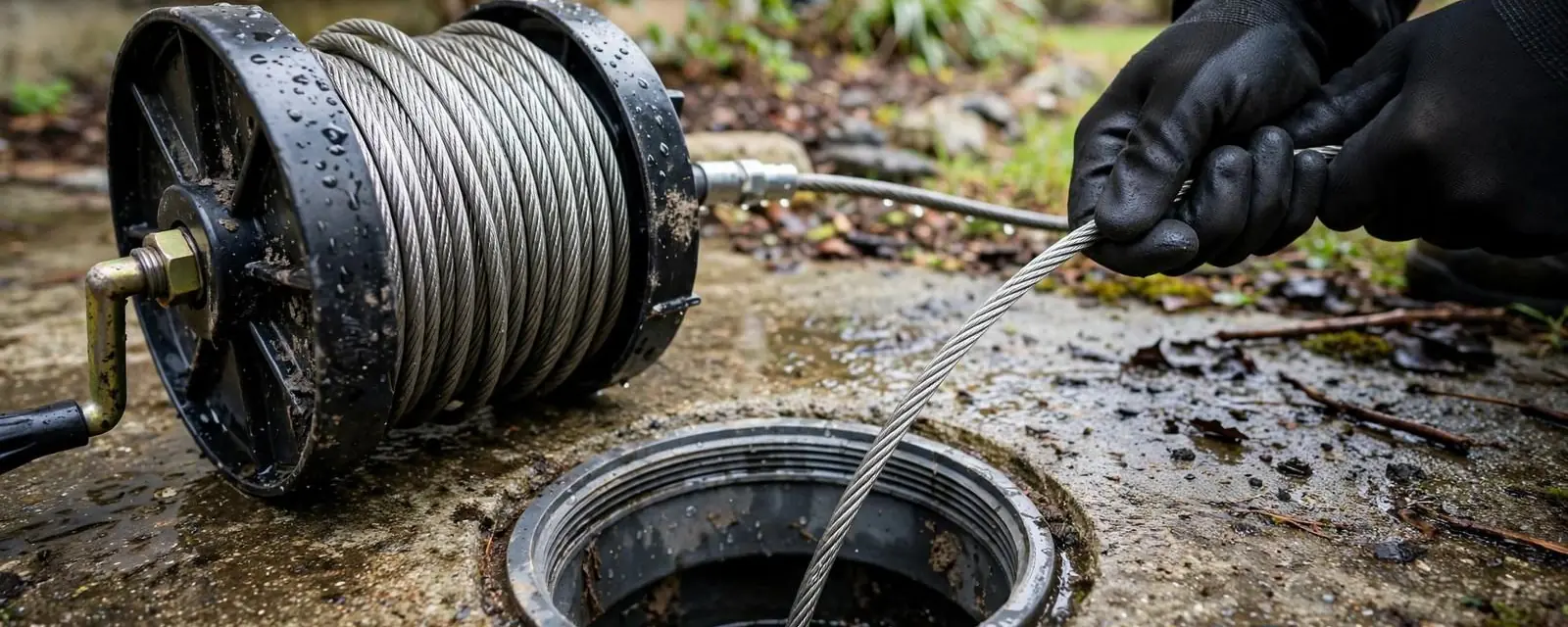
A machine cable with the right head breaks the blockage and pulls debris out.
Flush and test flow
We run water to confirm the line drains at full speed.
Camera check if needed
When the cause is unclear, the camera shows the pipe condition before we leave.
Cleanouts, access and what we need from you
A cleanout is a capped pipe that gives a machine a direct path into the main line. If yours is missing, buried under pavers or stuck, tell the dispatcher on the call. Installing an accessible cleanout is often the best investment after an emergency, because every future visit gets faster.
In northern Desert Hot Springs, some homes are being moved from septic to sewer under the district project, and new sewer connections change where the cleanout should sit. Ask us to mark it for you once the work is done.
| Cause | What we use | Likely follow-up |
|---|---|---|
| Grease and paper plug | Machine cable then hydro jetting | Grease control habits |
| Root mat at a joint | Cutting head then camera | Joint repair or lining |
| Foreign object | Retrieval head | None if the pipe is sound |
| Repeat blockage in the same spot | Cable, jet and camera | Repair of a sag or crack |
A quick way to tell main line from branch line
Run the washer drain or flush a toilet and watch the lowest tub or floor drain. If water appears there, the main line is blocked. If only one sink is slow, read drain cleaning instead.
Cleaned once, blocked again?
Ask about a jet and camera check. Call any hour.
After a blockage we recommend hydro jetting when the pipe wall is coated, and a camera look when the line has failed before. Both are quoted on the call so there are no surprises.
The Uniform Plumbing Code (UPC), as adopted in the California Plumbing Code, calls for accessible cleanouts, which is why we recommend adding one if yours is missing.
Keeping the line clear afterward
A cleaned line stays clean longer when you change a few habits. Keep grease out of the kitchen drain, flush only toilet paper, and put a strainer on every tub and sink. If you have large trees close to the line, ask for a camera check every year or two, since roots grow back into joints.
For rentals and multi-unit buildings, a short notice to tenants about wipes and paper towels can prevent most repeat clogs. Many property managers add it to the lease or a unit sign.
Yes. The line is answered 24/7.
It fixes a buildup. If roots or a damaged section caused the blockage, the problem returns until that is repaired.
Most are a capped pipe outside the house, near a wall, or in a front or side yard. If you cannot find it, tell the dispatcher and we will help locate it.
No. A plunger only moves water within the house and will not clear a blockage in the main line.
Yes, but we first confirm the tank is not full. A full tank needs pumping, not cabling.