
Homeowners usually call for a camera after a backup. Buyers, landlords and anyone planning a remodel should consider one before trouble starts.
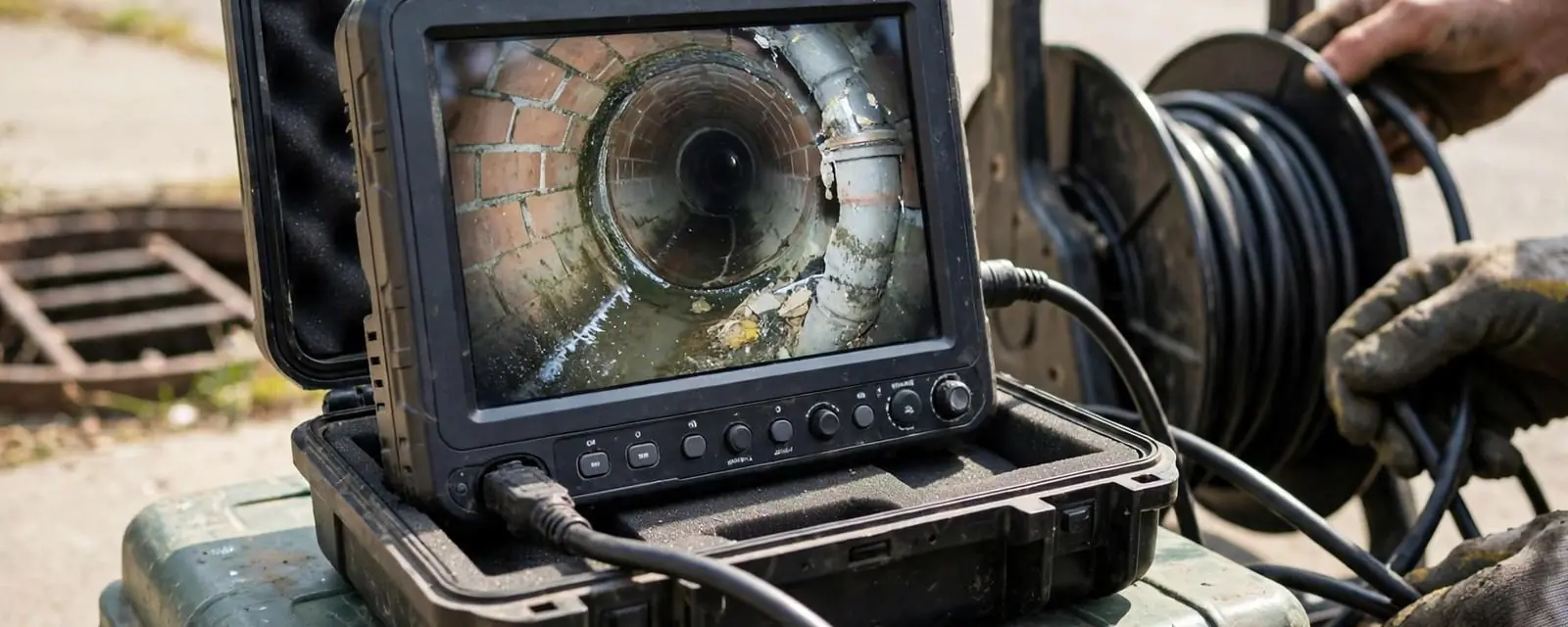
Sewer lines are out of sight, which is why problems stay hidden until a tub backs up. A sewer camera inspection is a plumber feeding a small waterproof camera down the line from a cleanout and watching the monitor. The recording shows the pipe material, the joints, any buildup and any damage.
What the camera can show
Root intrusion
Fine roots at a joint or a thick mat filling part of the pipe.
Cracks and breaks
Fractures along the pipe, or a section that has separated.
Bellies and sags
A low spot that holds water and collects debris.
Offset joints
Sections that no longer line up, which catch paper and waste.
Buildup
Grease, scale or mineral coating on the pipe wall.
Pipe material
Cast iron, clay, plastic or a mix, which decides the repair.
When an inspection is worth scheduling
- After a backup, to find the cause instead of clearing the symptom
- Before buying a home, especially an older one or one with mature trees nearby
- When the same drain clogs more than once a year
- Before a remodel that adds a bathroom or moves a drain
- Before and after a septic to sewer connection, to confirm the lateral is sound
The Desert Hot Springs housing mix includes homes from the early townsite years around Palm Drive and Pierson Boulevard, newer subdivisions and homes on septic. Each combination has different pipe materials and different risks, which is why the camera beats a guess.
How a camera visit works
Find access
We use the main cleanout or a vent, and clear the line first if it is blocked.
Run the camera
The camera moves down the line while we watch the monitor and record.
Mark and measure
When we find a problem, we locate it at the surface and note the distance.
Review the recording
We explain what is normal, what is minor and what needs repair, with the video as evidence.
| Finding | What it usually means | Next step |
|---|---|---|
| Clean pipe, tight joints | Line is in good condition | Normal maintenance |
| Heavy buildup | Line is narrowing | Hydro jetting |
| Roots at one joint | Joint is open | Cut roots, then repair or line |
| Cracked or collapsed section | Pipe has failed | Sewer line repair |
Buying a home here
A camera run before closing can reveal a problem the seller never saw. Ask the seller for cleanout access and whether the property is connected to sewer or on septic, since the answer changes what you inspect.
Want to see your sewer line?
Call to book a camera inspection. Most visits are booked the same week.
A camera does not replace a code inspection, but the findings help you decide whether pipe size and slope meet the Uniform Plumbing Code (UPC) standards the California code is based on.
If the camera finds a stoppage rather than damage, our sewer line cleaning service clears it, and if it finds roots, the same recording guides the repair.
How we handle the recording
The recording is a record of your line on the day we inspected it. We note the distance from the cleanout to anything we see, so a repair crew knows where to dig. If you are buying a home, the recording gives you something to share with the seller or an agent, and it can support a request for a repair credit.
A camera does not replace a permit inspection, and it does not tell you the future. It tells you what the pipe looks like today. A clean recording is good news, and a finding like roots or a belly is a chance to plan a repair before it becomes an emergency.
Septic properties and the move to sewer
Many northern Desert Hot Springs properties are moving from septic to sewer through the Mission Springs Water District M2 project. Before a connection, a camera shows whether the house line is sound enough to connect. After it, a second look confirms the connection is clean. Pairing both with sewer line cleaning where needed avoids surprises.
Most take under an hour once the camera has access, but a long run or a blocked line adds time.
We clear it first, then run the camera. A blocked line hides the pipe wall.
Yes. We can share the recording and still images so you can keep a record or show a buyer, seller or insurer.
No. A sewer camera looks at the drain line. For supply leaks, see leak detection.
Yes, from the house to the tank. We confirm whether the tank itself needs service.