
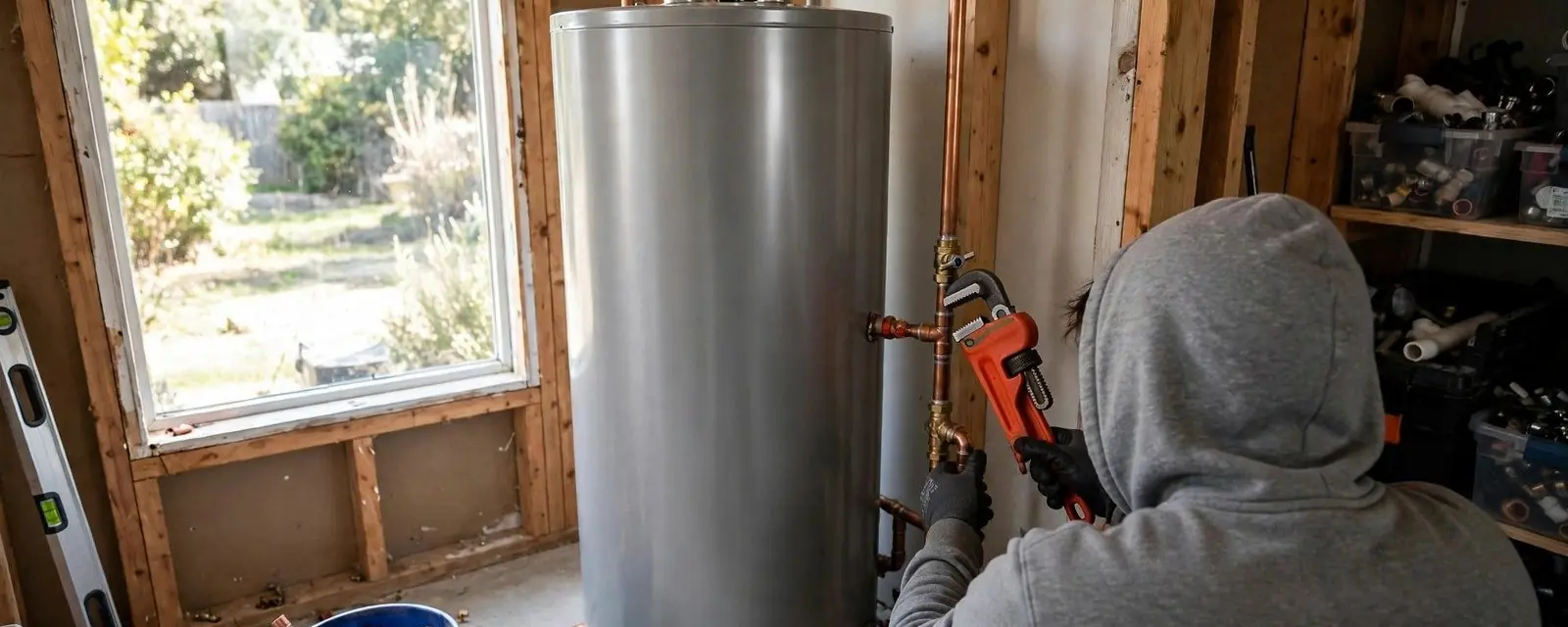
Most installs go smoothly when four things are settled before the old tank comes out: size, fuel, venting and location.
This page is for planned work, such as a new build, a remodel, a move from electric to gas, or a heater you want to replace before it fails. If your heater is already leaking, our emergency replacement page is the faster route, and the 24/7 line is open.
What goes into a correct install
- Right size for the number of people and fixtures running at once
- A gas line, shutoff and sediment trap that meet code
- A flue that rises and terminates correctly and has combustion air
- A temperature and pressure relief valve piped to a safe discharge
- Seismic straps, because the home sits near the Mission Creek Fault
- An expansion tank when the system has a closed check valve or a pressure reducing valve
- A drain pan and drain line where a leak could damage finished space
We confirm each item on the day of the install instead of assuming the old setup was right. Old heaters are often installed to a code that has changed, and a clean swap can still fail an inspection if the vent or relief line is wrong.
Gas, electric and heat pump options
| Type | What it needs | Good to know |
|---|---|---|
| Gas tank | Gas line, flue and combustion air | Fast recovery, vent must be correct |
| Electric tank | A dedicated circuit of the right size | Simple venting, check the panel |
| Heat pump hybrid | Space, airflow and a condensate drain | Efficient, cools its room |
| Tankless gas | Larger gas line and a vent system | See tankless water heaters |
Desert summers matter here. A heat pump heater in a hot garage works differently than in a cool room, and a tank in an attic can run very hot. We talk through location before choosing a model, and we tell you if a different spot is better.
Where the heater goes
Garages are common in newer subdivisions, while older homes near the original townsite may have a closet or utility room location. Manufactured homes need a unit rated for the installation and the right clearances. Tell us where the old unit sits and whether you want it moved, because moving a heater adds gas, water and vent work.
Gas units in a living space need a sealed combustion or properly vented setup and a carbon monoxide alarm nearby. If your home has no alarm, we recommend one.
Want a plan and a price?
Call and we will talk through your home and give a clear price before the work starts.
Permit and inspection
The City of Desert Hot Springs Building Division issues permits and inspects water heater installations under the California Plumbing Code. We can pull the permit and arrange the inspection, or support you if you pull it yourself. For specifics, the division lists a phone of (760) 329-6411.
If your heater has failed and you are comparing repair against replacement, read water heater repair first. It may save you the cost of a new unit.
The Uniform Plumbing Code (UPC), as adopted in the California Plumbing Code, covers venting, relief valves, expansion control and the gas connection, and an inspector checks them.
Earthquake straps, expansion tanks and relief lines
Three small parts make a big difference. Straps keep the heater upright in a quake, an expansion tank absorbs pressure when water heats in a closed system, and a relief line carries water safely to a drain if the valve opens. Inspectors look for all three, and so do we.
Desert Hot Springs sits near the Mission Creek Fault, so bracing is not a technicality here. If your current heater has loose or missing straps, add them now, even if you are not replacing the unit.
Garage, attic and closet installs
Garage heaters need protection from vehicles and a raised base for gas units. Attic heaters need a pan and a drain, since a leak can ruin a ceiling. Closet heaters need combustion air and clearance. We walk the space on the first visit and tell you what the location needs.
A straight swap often takes a few hours. Moving the heater or changing fuel adds a day or more.
Yes, if the new location has room, venting and access. It adds plumbing and gas work, so we quote it separately.
Yes, with a unit rated for that type of home and the required clearances.
It depends on how many people use hot water at the same time and how many fixtures run together. We size it with you at the visit.
Ask the dispatcher about the earliest visit open. For a failed heater, call the 24/7 line.