
A leak you can see is half the story. A leak you cannot see can run for months, and the first sign is often the water bill.
If water is actively escaping, shut off the main valve first. Then call our 24/7 line. Leak emergencies are answered at night and on weekends. While you wait, switch off power to any room with wet walls or ceilings and move electronics and rugs away from the area.
When a leak becomes an emergency
A meter that keeps moving
With every fixture off, a spinning or ticking meter means water is escaping somewhere on your side of it.
A warm spot on the floor
A hot water line leaking under a slab can warm the floor above it.
Sound of running water
A faint hiss or trickle when everything is off often means a pressurized line is leaking.
Stains and bubbling paint
Ceiling and wall stains, peeling paint and swollen baseboards point to moisture inside the wall.
Low water pressure
A sudden drop can mean a large leak between the meter and the house.
A wet or green patch in the yard
A damp area with no rain or irrigation suggests a buried service line is leaking.
How we find a leak without tearing things open
We start with the simplest test. Turn everything off, watch the meter and note the reading. That tells us whether the leak is real and whether it is on the supply side or in the drain. From there we narrow it down with pressure tests that isolate sections of pipe.
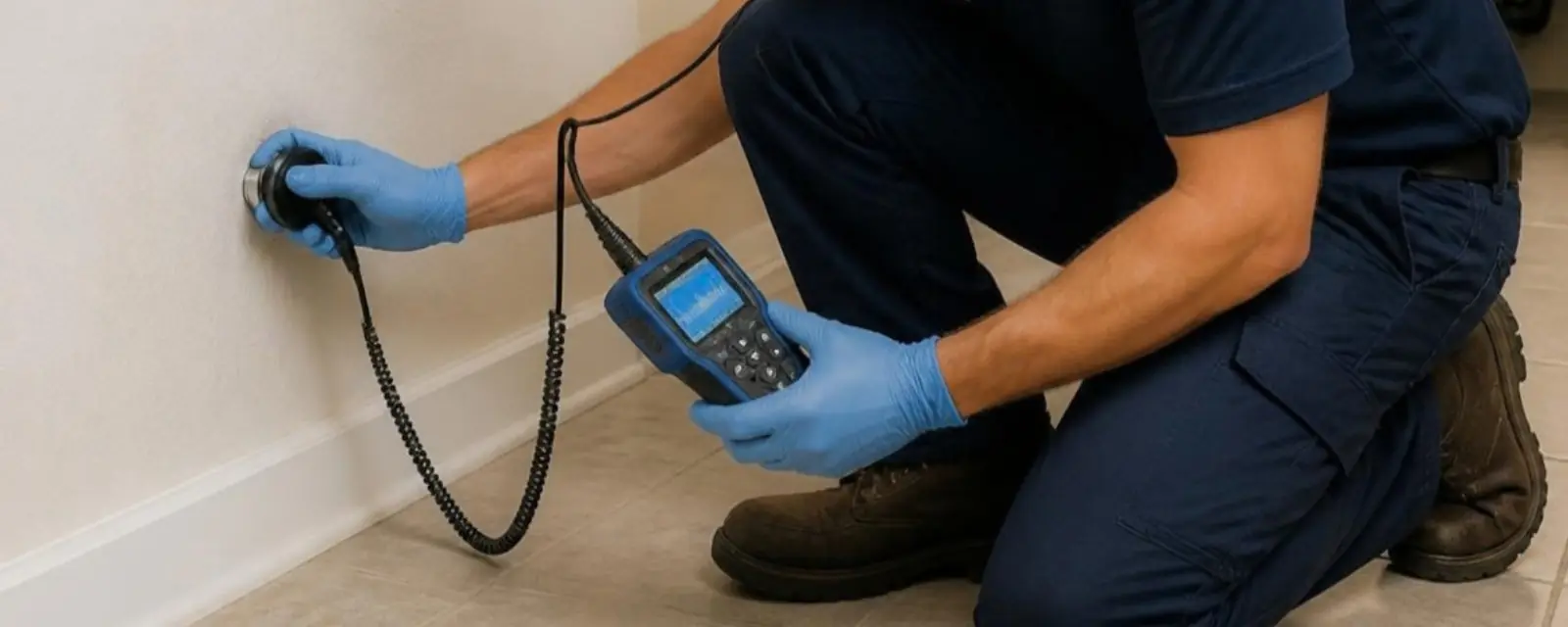
Electronic listening equipment picks up the sound of escaping water through floors, walls and soil. A thermal camera helps with hot water leaks. A tracer gas test can help when sound is weak. We mark the spot on the surface, so the repair opens a small area instead of a whole room.
| What you notice | Likely source | Where to read more |
|---|---|---|
| Bill up and meter moving | Supply line, slab or yard line | Water line repair |
| Warm floor patch | Hot water line under the slab | Slab leak repair |
| Ceiling stain below a bathroom | Drain, supply or shower pan | Leak detection then repair |
| Running toilet | Flapper or fill valve | Toilet repair |
High water bills and the meter test
Many calls start with a bill that jumped. A meter test separates a leak from a change in use. We confirm the reading, shut off the house at the main, and see whether the meter still turns. If it does, the leak is between the meter and the house or inside it. If it does not, the extra use is inside the house, such as a toilet that runs.
In Desert Hot Springs, Mission Springs Water District reads the meter and bills water and sewer service, so the first call for a billing question is the district at 760-329-6448. We handle the plumbing side and tell you what the test shows.
Meter still moving with everything off?
Call and we will schedule a leak detection visit.
Leaks in a desert home
Heat and dry soil are hard on buried lines and outdoor fittings. Irrigation lines, hose bibs and pool or spa equipment leaks are common. A pool or spa that loses water faster than evaporation explains is worth testing before you refill it. We handle the plumbing side of pool and spa supply lines, and we will tell you plainly if the leak is in the shell, which is a pool specialist job.
Commercial properties and rentals carry added cost when a leak runs. Property managers can ask for a written summary of findings. For after-hours calls on a business, see commercial plumbing.
A repair after detection follows the California Plumbing Code, which is based on the Uniform Plumbing Code (UPC), and a pressure test confirms the line holds before it is closed up.
Many homeowner policies cover sudden water damage but not a slow leak that went unnoticed. Ask your insurer how your policy treats leak detection costs, and save the findings.
Yes. The line is open 24/7. We tell you how to shut off water and power while you wait.
Watch the meter with every fixture off. If it keeps moving, you have a leak. A bill that climbs without a change in use is another sign.
Only the smallest opening needed after we pinpoint the leak. Locating it first keeps the damage small.
Yes, using listening equipment and pressure tests. See our slab leak repair page for what comes next.
Mission Springs Water District handles billing. We handle the plumbing test that shows whether a leak caused the increase.
We check the supply and return plumbing. If the leak is in the pool shell, we will tell you so you can call a pool specialist.