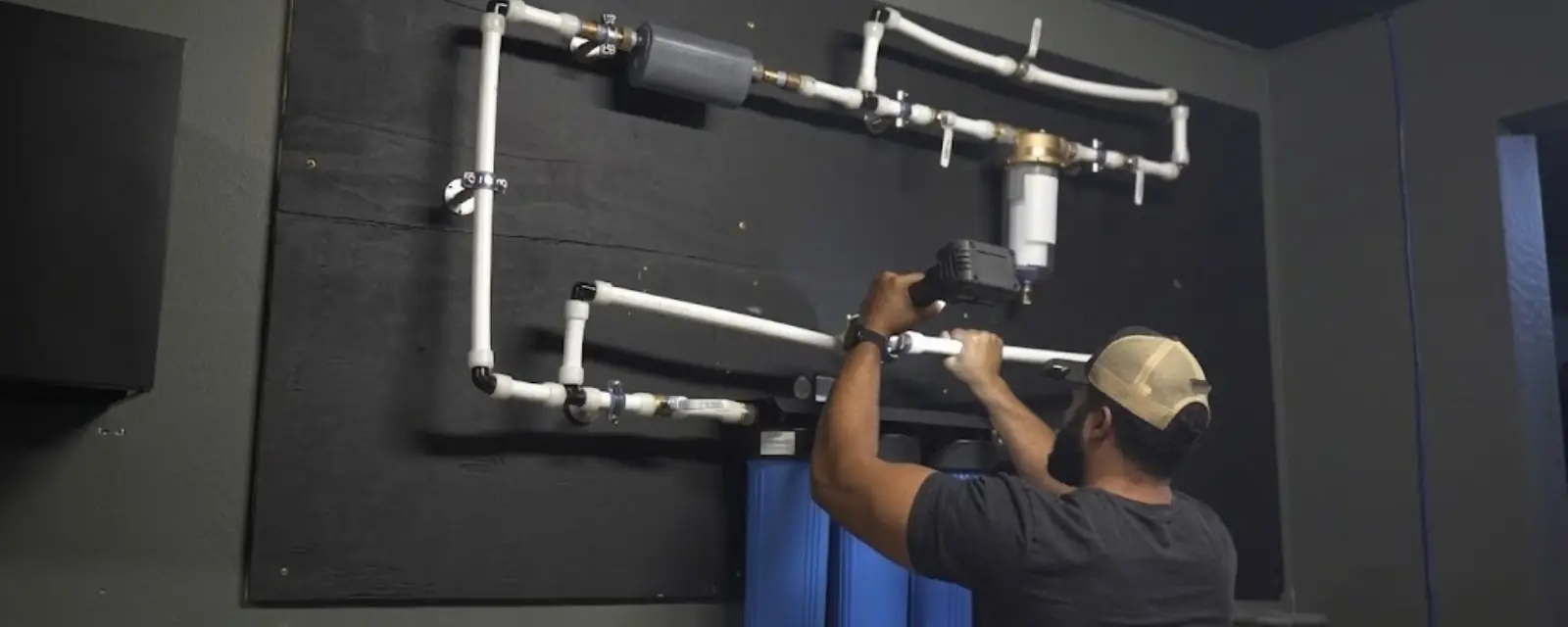
Look at the label on each filter and write the install date on it. Every other rule in this guide builds on that habit.
What each part does
| Part | Job | Typical care |
|---|---|---|
| Sediment pre-filter | Catches sand and particles | Replace on the maker schedule |
| Carbon pre-filter | Reduces chlorine taste and odor | Replace on the maker schedule |
| RO membrane | Filters dissolved material from water | Replace less often, when output or taste changes |
| Post carbon filter | Polishes taste before the faucet | Replace with the pre-filters |
| Storage tank | Holds filtered water | Check air pressure once a year |
| Drain line and saddle valve | Carries rejected water to the drain | Check for leaks and clogs |
Pre-filters protect the membrane. If they clog or wear out, chlorine and sediment reach the membrane and shorten its life. That is why pre-filters are changed more often than the membrane itself. Follow the maker schedule, and shorten it if your water is hard on filters.
A yearly maintenance routine
Shut off the supply and relieve pressure
Close the feed valve and the tank valve, then open the RO faucet until it stops.
Replace the filters
Unscrew each housing, install a new cartridge and tighten by hand.
Sanitize the system
Follow the maker instructions for a sanitizing solution, then rinse well.
Restart and flush
Open the valves, let the tank fill and discard the first tank before drinking.
Check the tank air pressure with a gauge when the tank is empty. Low pressure means a slow flow to the faucet. Most tanks hold a small air charge that can be topped up with a bicycle pump. Check each fitting for drips after restart, and look at the drain line for kinks.
Signs the membrane is wearing out
- Water tastes salty or flat even after fresh filters
- The tank fills very slowly
- The system runs and drains constantly
- A meter or tester shows the output has changed from when the system was new
A cheap handheld meter helps you track dissolved solids in the output. Note the reading when the system is new, then check now and then. If the number climbs, the membrane may need replacement.
Desert Hot Springs: read the water report first
Mission Springs Water District provides drinking water to Desert Hot Springs and publishes an annual water quality report on its website, including the 2025 report. Use it to understand what is in your supply, and test your tap before you decide on a system.
We do not quote a hardness or contaminant figure from memory. If your report shows something you want to treat, a system matched to that result will serve you better than a generic one. Our water softener and filtration page explains the options.
Look for systems tested to NSF and ANSI 58 for reverse osmosis claims, and note that drain and supply connections follow the California Plumbing Code, which is based on the Uniform Plumbing Code (UPC).
Want us to service your RO system?
Call and we will schedule a visit.
Leaks, noise and low flow
The most common leak is at a push-fit tube connection. Pull the tube out, check that the end is cut square, and push it back in firmly. A leak at a filter housing often means the o-ring is dry or pinched, so lubricate it with silicone grease and reseat it.
A constant gurgle at the drain can be an air gap faucet or a clogged drain saddle. A system that runs without stopping often has a failed shutoff valve. If a leak stays after a few simple checks, shut off the feed valve and call a plumber. A leak under a sink can ruin a cabinet, as our faucet and fixture repair page explains for sink leaks in general.
A short care checklist for rentals and busy homes
Keep these on the cabinet door
- Install dates written on each filter
- The model number and maker phone number
- The next filter change date
- A spare set of pre-filters
- The shutoff valve location marked with tape
We serve homes in Palm Springs and the wider service area. If the system is leaking or you cannot find the shutoff, call and we will help.
Choosing and testing your system
If you are buying a system, look for independent test marks on the box that show what the unit removes. A claim on a flyer is not a test result. Compare the claims to the items in your district water report, and pick a system that targets what you care about.
After you install or service a system, test the water. A simple meter that reads dissolved solids gives a quick check. For specific contaminants, a certified lab test is the right tool. Keep results with your system records, so you can see how the unit performs over time.
Follow the maker schedule, often every six to twelve months for pre-filters. Test your tap and shorten the interval if filters clog early.
Often several years, but it depends on water quality and pre-filter care. Replace it when taste or output changes.
A loose tube, a worn faucet cartridge or a failing shutoff can cause it. Check the connections first.
No. Discard the first tank, since it can contain loose carbon fines.
Not always. A softener can protect the membrane in hard water. Read your water report to decide.