
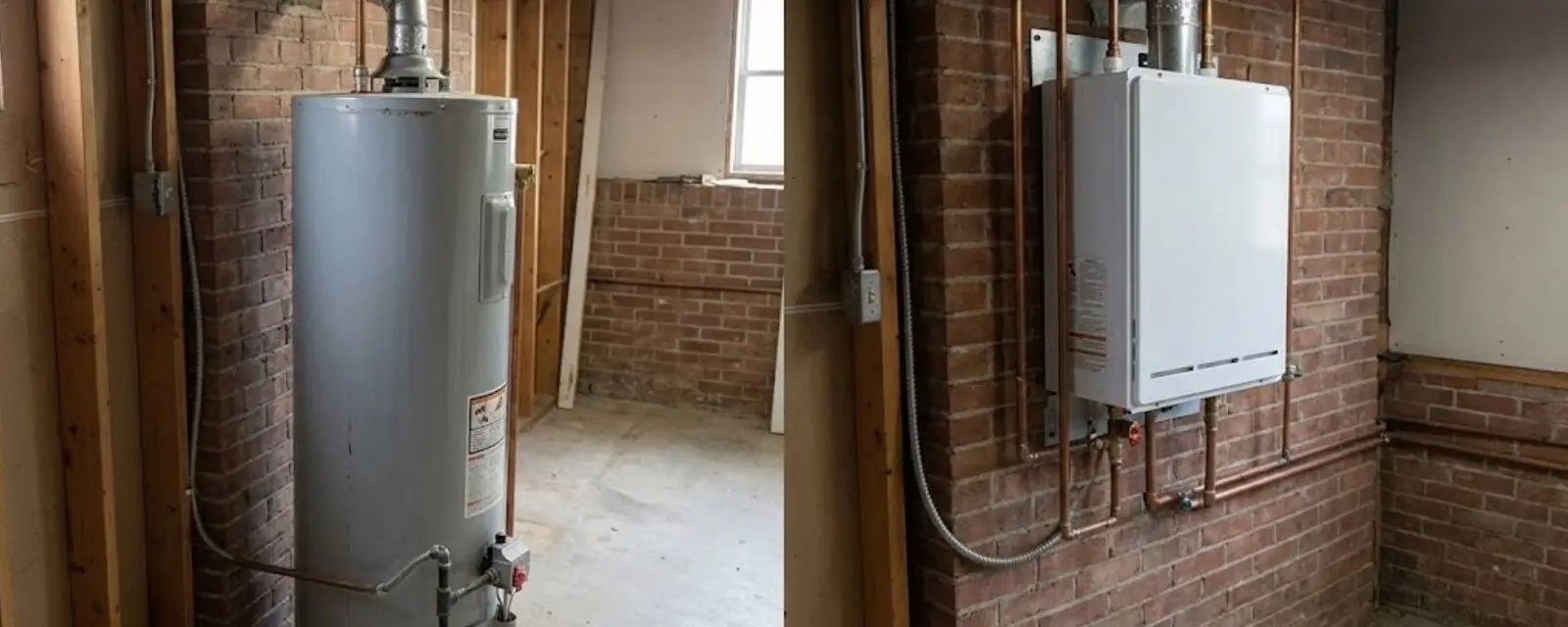
If a gas heater vent shows soot, rust or a loose joint, shut off the gas and call a plumber. Do not keep running the heater.
How a draft hood vent works
Most tank heaters in older homes are atmospheric, which means hot exhaust rises on its own. A metal pipe leaves the top of the heater, goes up and out through a wall or roof. The pipe depends on heat and height to pull gases away, so any sag or long horizontal run weakens the draft.
Some newer heaters use a fan or direct venting through plastic pipe. These have different rules, and the maker instructions are the guide. Never mix parts between systems.
| Check | What good looks like | Warning sign |
|---|---|---|
| Rise and slope | Pipe rises and slopes upward all the way out | Sagging or level runs |
| Joints | Secure with sheet metal screws | Gaps, loose sections or rust holes |
| Clearance | Space between vent and wood or insulation | Scorched wood or melted insulation |
| Termination | An approved cap above the roof or outside the wall | Cap missing or blocked by a nest |
| Draft hood | Clean and in place | Soot streaks on or around the hood |
Warning signs of vent trouble
Soot around the heater
Black marks on or near the draft hood mean exhaust is spilling into the room.
A yellow or flickering flame
The burner should burn blue. Yellow or lazy flames signal poor combustion.
Rust on the vent or the tank top
Moisture and exhaust corrode the vent from the inside.
A stuffy smell or headaches
These can be signs of carbon monoxide, so ventilate and call for help.
Carbon monoxide has no smell. A working alarm near the heater and near bedrooms is the best protection. Test it monthly and replace it as the label says. If an alarm sounds, leave the house and call emergency services.
Desert Hot Springs: heat, garages and permits
Many Desert Hot Springs homes keep the water heater in a garage or a utility closet. A garage heater needs protection from vehicles and from stored items that can touch the vent. Keep paint, fuel and rags away from the heater and clear of the vent.
The City of Desert Hot Springs Building Division issues permits for water heater work, and can be reached at (760) 329-6411. If your vent has to be changed, ask whether the change needs a permit before work starts.
Vent materials, slope and clearances for a gas water heater are set by the California Plumbing Code, which is based on the Uniform Plumbing Code (UPC), together with the heater maker instructions.
Want a heater vent inspected?
Call and we will check it and explain what we find.
Common vent problems and fixes
- Sagging sections get new straps or a new length of pipe
- Rusted vents are replaced, not patched
- Missing screws at the joints are added
- A bird nest or debris at the cap is cleared
- A vent that runs too long or flat is rerouted
- A vent that is too small or the wrong type is replaced
A rusted vent is a sign of age and often a sign that the heater itself is old. If the tank is also old, replacing both may be the sensible choice. Our water heater installation page covers vent, relief valve and bracing, and the water heater repair page covers repairs.
Why a new heater can still fail inspection
A new tank connected to an old vent may not meet current code. The old vent may be the wrong size, may run too flat, or may be corroded. An inspector looks at the whole system. Plan to replace or upgrade the vent with the heater, and ask your plumber to price it in. We serve Palm Springs and the wider service area.
A yearly vent check you can do in ten minutes
Once a year, with the heater cool, look at the vent from the heater to the outside. Check that every joint is tight, that the pipe rises as it leaves the heater and that nothing is stored against it. Look at the cap from outside for nests or debris.
You can also do a simple draft test. With the burner running, hold a lit match or a smoke stick near the draft hood. The smoke should be pulled into the vent. If it blows back into the room, the vent is not drawing, and the heater should be shut off until it is inspected.
Look for upward slope, tight joints, no rust or soot and a clear cap. If anything looks wrong, have a plumber inspect it.
Both are used, depending on the heater type and the layout. The type of heater and the maker instructions decide which is correct.
It can be a sign of poor combustion or a blocked vent. Turn off the heater and call a plumber.
Yes, near the heater and near bedrooms. Test it monthly.
It is commonly permitted work. Ask the Building Division at (760) 329-6411 to confirm for your case.