
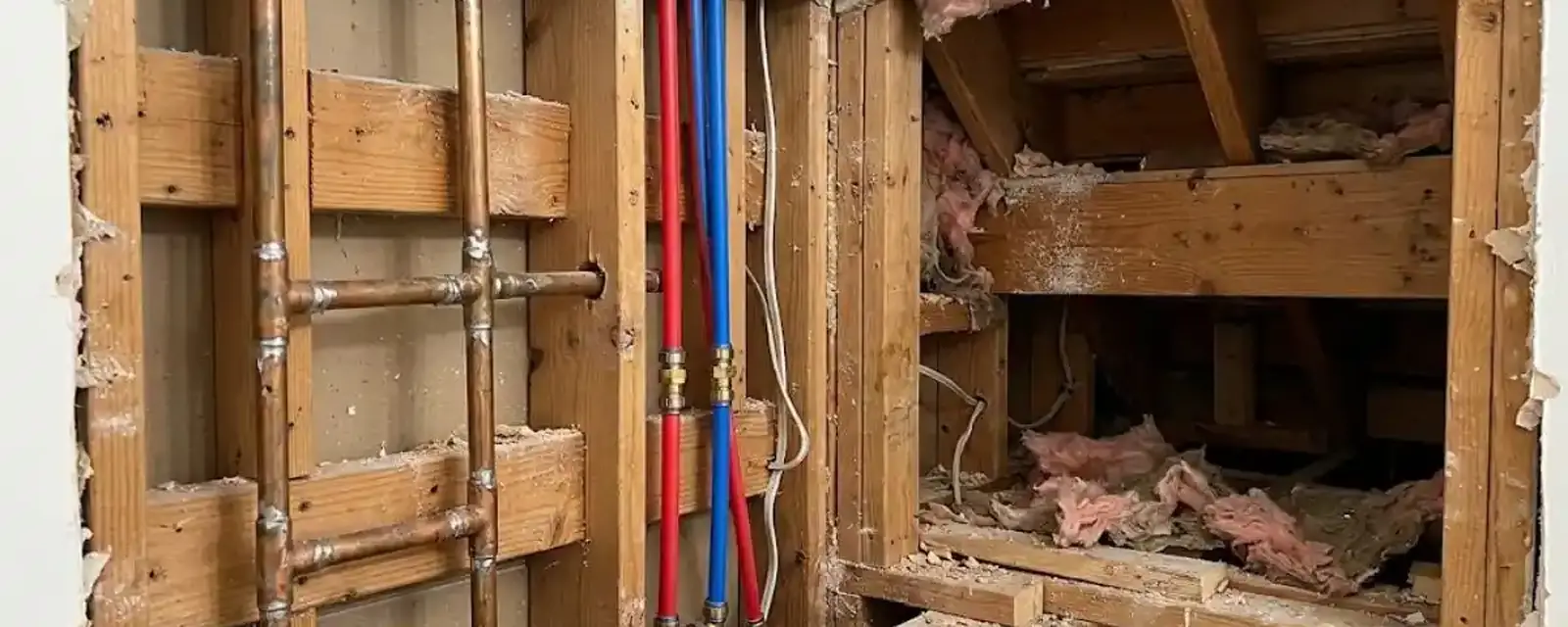
PEX stands for cross-linked polyethylene. The cross-linking is what makes the plastic strong enough for pressure and heat.
PEX A, B and C
The letters describe how the plastic is cross-linked. PEX A is the most flexible and can be expanded for fittings, B is a little stiffer and C is the stiffest. All three are used for potable water when marked as approved. The differences matter to installers more than to homeowners.
| Type | Flexibility | Common fittings |
|---|---|---|
| PEX A | Highest | Expansion rings |
| PEX B | Medium | Crimp or clamp rings |
| PEX C | Lowest | Crimp or clamp rings |
Why plumbers like PEX
- It runs through walls and attics with fewer cuts and fewer joints
- It resists scale, pitting and many corrosion problems that attack copper
- It tolerates a little water expansion better than rigid pipe
- A whole house repipe can often be done with less wall damage
- It is quieter than rigid pipe, with less water hammer
Fewer joints mean fewer places to leak. That is the main appeal for a repipe. A home with pinhole leaks in copper may be a good candidate, and our repiping page explains how a repipe goes.
Where PEX does not belong
Sunlight breaks PEX down. Outdoor runs, exposed attic sections near vents and any spot in direct sun need cover or a different pipe. Desert sun is intense, and an exposed section of PEX can fail long before the rest of the system. PEX also should not be used within a few inches of a gas water heater flue or other hot surface without a metal transition.
Rodents sometimes chew plastic pipe, and some attics see this. Where there is a risk, protect the pipe or use copper in those sections. A good installer knows where each material makes sense.
PEX strengths
- Flexible and fast to install
- Resists scale and pitting
- Fewer joints
- Good for whole house repipes
PEX limits
- Breaks down in direct sun
- Not for exposed outdoor runs
- Needs protection near heat
- Some water treatment chemicals can affect it
Desert Hot Springs: permits and code
The City of Desert Hot Springs Building Division treats replacing a concealed defective pipe as new work that needs a permit. Whole house repiping with PEX therefore normally involves a permit and an inspection under the California Plumbing Code. The division can be reached at (760) 329-6411.
That is a reason to hire a contractor who pulls the permit. Verify the contractor license on the California Contractors State License Board website, and ask for the permit number before the work begins.
PEX for drinking water is made to ASTM F876 and certified to NSF and ANSI 61, and its use is governed by the California Plumbing Code, which is based on the Uniform Plumbing Code (UPC).
Want to know if PEX fits your home?
Call and we will inspect the system and explain your options.
PEX or copper: a fair comparison
Copper has a long record, handles heat and sun well and is easy to recognize. It can pit in some water and takes more labor to install. PEX is faster and gentler on walls but needs protection from sun. Many homes use PEX inside and copper at exposed or high heat spots, and that mix often makes the most sense.
If you are choosing between them, ask your plumber why they prefer one in each part of the house. A good answer refers to heat, sun, access and code, not just price. Our plumbing installation page also covers new lines for remodels.
Is PEX safe for drinking water
PEX pipe made for potable water is widely used and accepted when it is installed to code. Look for the markings printed on the pipe, which show the standard it meets. If you have taste or odor concerns after a repipe, flush the lines for a few minutes and ask your plumber. We also serve homes in Palm Springs and across the service area.
Fittings, tools and why the installer matters
PEX uses crimp rings, clamp rings or expansion rings to join pipe to fittings. Each system needs its own tool, and the tool has to be checked against a gauge to confirm a tight joint. A bad crimp may hold for months and fail later. That is why installer skill matters more than the pipe itself.
Ask the installer how joints are checked and whether the manifold is accessible. A central manifold with a valve for each fixture lets you shut off one bathroom without shutting off the house. It is a real convenience, and it is easy to build in during a repipe.
It depends on the house. PEX is faster and easier on walls. Copper is better for exposed and high heat spots. Many repipes use both.
Not exposed. Sunlight breaks it down. Cover it or use another pipe type where it will see the sun.
A whole house repipe normally does, since replacing concealed pipe is treated as new work. Confirm with the Building Division at (760) 329-6411.
Makers rate it for decades when installed correctly and protected from sun. Actual life depends on water conditions and installation.
Yes. A damaged section can be cut out and replaced with the right fittings.