A toilet that fills too high, or never stops filling, wastes water every hour. The fix is often a two minute adjustment.
Find the right water level
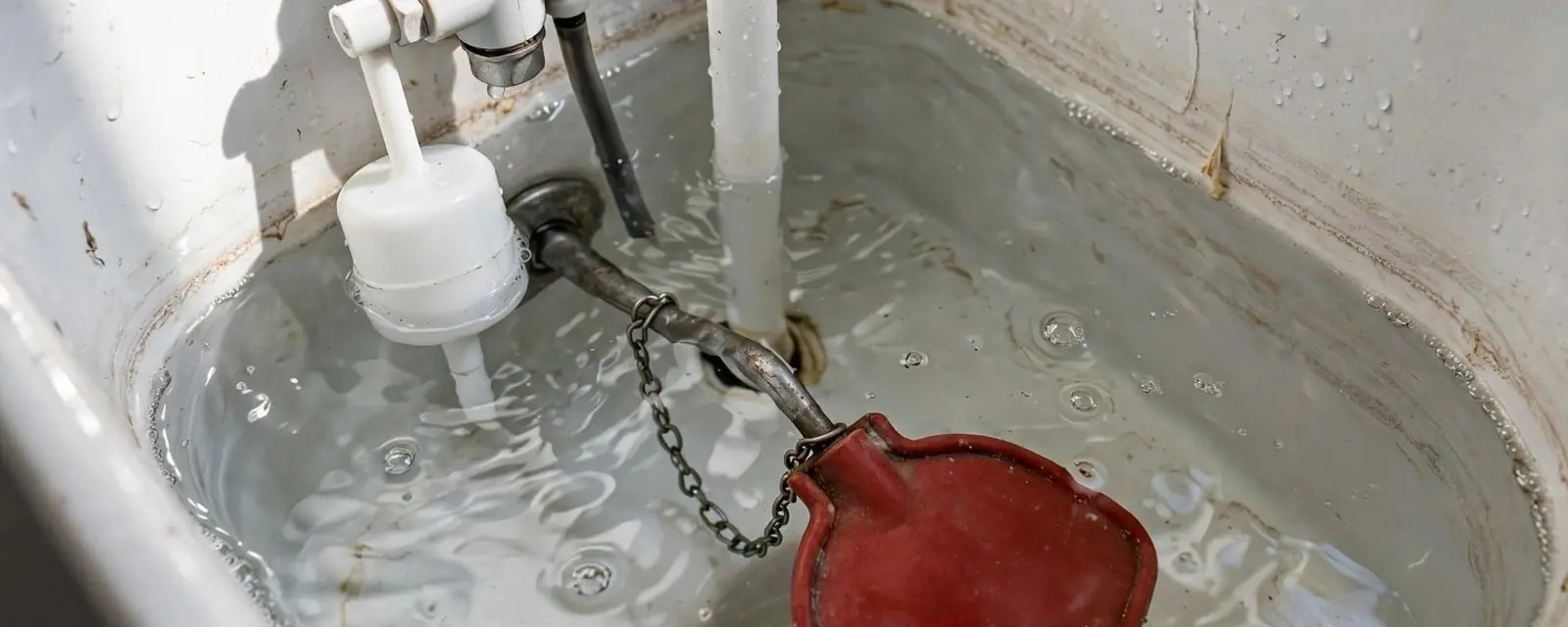
Inside the tank is a tall open tube called the overflow tube. The water should stop about an inch below its top. Many tanks have a line marked inside, and some brands print the level on the tank wall. If the water goes above the tube, it spills into the bowl and the toilet runs without stopping.
If the water stops too low, the flush will be weak. Raise the level a little at a time and test with a flush after each change. A small turn goes a long way, so change one thing at a time.
Adjusting the three common float types
| Type | How to adjust | Watch for |
|---|---|---|
| Cup style float on the fill valve | Squeeze the clip and slide the cup on the rod | Cups that stick on the rod |
| Ball float on an arm | Bend the arm or turn the adjusting screw | A float ball that has filled with water |
| Float on a screw | Turn the screw on top of the valve | Screws that are corroded or stripped |
If the float ball has water inside, replace it. If the adjustment screw is stripped, replacing the fill valve is cheap and quick. Most fill valves are universal and fit most tanks, and they come with clear instructions.
If the toilet still runs, check the flapper
The flapper is the rubber seal at the bottom of the tank. A worn flapper lets water leak into the bowl, and the fill valve then refills the tank. Put a few drops of food coloring in the tank, wait without flushing, and look at the bowl. If color appears, the flapper leaks.
- Check that the chain has a little slack and does not catch under the flapper
- Wipe the flapper seat with a cloth to remove scale
- Replace the flapper if it is warped, sticky or cracked
- Make sure the replacement matches the flush valve size
Scale is common on desert fixtures, and a gritty seat stops a flapper from sealing. A quick wipe with a damp cloth often fixes the problem. If a new flapper does not fix a leak, the flush valve seat may be pitted, which needs a new valve or a toilet repair visit.
Desert Hot Springs: a running toilet shows up on your bill
Mission Springs Water District reads the meter and bills water service in Desert Hot Springs. A toilet that runs unseen can raise a bill without any visible leak, and the first step is to confirm the cause. Ask the district about your usage history at 760-329-6448.
If the toilet is fixed and the bill stays high, the leak may be elsewhere. Our leak detection page explains the meter test we use to tell a toilet leak from a leak in the supply line.
Replacement fill valves should be listed for potable water, as the California Plumbing Code, which is based on the Uniform Plumbing Code (UPC), expects.
Toilet still running after you tried?
Call and we will diagnose and fix it.
When a plumber is the better call
Call a plumber if the tank is cracked, if water leaks at the base, if the toilet rocks, or if the fill valve will not shut off after you replace it. Water at the base can come from a wax ring failure, which needs the toilet reset. The toilet repair page explains what we do.
If you manage a rental, a running toilet is a common tenant call. A quick check and a new fill valve at turnover can head off the next one. We serve properties across Palm Springs and the wider service area.
A short checklist before you close the tank
Check these before you replace the lid
- The water stops about an inch below the overflow tube
- The fill tube clip points into the overflow tube and not into the tank
- The flapper seals and the chain has slack
- The supply line and shutoff valve are dry
- The toilet flushes fully and refills quietly
Replacing the fill valve when adjustment is not enough
A fill valve that will not shut off, hisses or fills slowly is worn out. Replacing it is a short job. Shut off the supply, flush to empty the tank, disconnect the supply line and unscrew the nut under the tank. Lift the old valve out, drop in the new one at the same height and tighten it by hand.
Set the height so the top of the valve sits at the maker recommended mark above the overflow tube. Attach the small refill tube to the overflow tube, but do not push it down into the tube. Turn the water back on slowly and check for leaks at the nut and the supply line.
- Buy a universal valve that fits most tanks
- Keep the old valve until the new one works
- Replace the supply line at the same time if it is old
- Flush several times and watch the level
The flapper may leak or the float may be set too high. Check the water level against the overflow tube, then test the flapper with food coloring.
About an inch below the top of the overflow tube, or at the fill line marked inside the tank.
Yes. A toilet that refills all day can add noticeably to usage. Check the toilet first, then ask the water district about your history.
Most are universal and take about half an hour. Shut off the supply, drain the tank, swap the valve and reconnect the line.
If the tank or bowl is cracked, if the flush stays weak after repairs, or if the toilet clogs often, replacement can be the better value.