
Plumbing in new construction is a sequence. You cannot go back to underground pipe once the slab is poured, so the first stage has to be right.
Stage one: underground
Before the slab goes down, the plumber lays drain pipe and sets sleeves where pipes will pass through the concrete. The trench has to slope toward the sewer or septic connection, and the pipe must be bedded properly. The inspector checks the work, often with a water test, before the trench is covered.
This is where the location of every fixture gets locked in. Moving a toilet drain after the pour means cutting concrete. Check the plans, walk the site and confirm fixture locations with the owner before the inspection.
Stage two: rough-in and top-out
| Stage | What happens | Inspection |
|---|---|---|
| Underground | Drain pipe and sleeves before the slab | Water or air test on the drain |
| Rough-in | Supply, drain and vent inside framed walls | Pressure test of supply and drain |
| Top-out | Vents and risers connected through the roof | Check of vent runs |
| Final | Fixtures set, water heater connected | Final plumbing inspection |
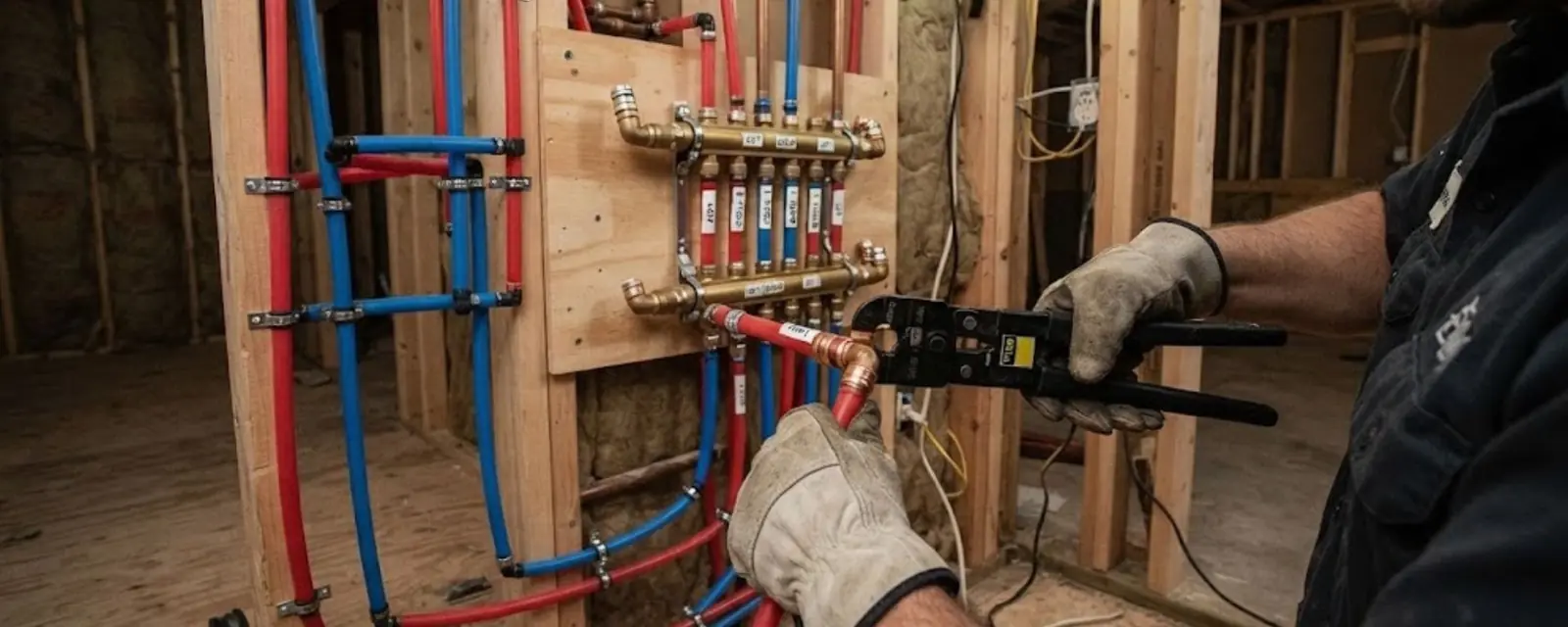
Once the framing is up, the plumber runs supply lines, drains and vents through the walls and ceilings. Tubs and shower bases are set. A pressure test on the supply and a test on the drain must pass before the walls are closed.
Pipe choices for new builds
Most new homes use PEX for supply, and plastic pipe for drains. Copper still has a place at exposed and hot spots. The choice affects cost, speed and long term performance. Our repiping page compares the materials in more detail. In the desert, protect any plastic from direct sun, since it breaks down over time.
Desert Hot Springs: permits, water and sewer connections
The City of Desert Hot Springs Building Division issues permits and inspects new work, and can be reached at (760) 329-6411. New construction needs a plumbing permit, and the division sets the inspection schedule.
Mission Springs Water District provides water and sewer service in the city. Part of the northern city is still on septic, and the district is connecting about 695 properties through its M2 Septic to Sewer Project. Before you design the underground stage, confirm with the district whether your parcel connects to sewer or needs a septic system. The district phone is 760-329-6448.
Underground drains, pressure tests and vent terminations are all set out in the California Plumbing Code, which is based on the Uniform Plumbing Code (UPC), and the building inspector enforces it at each stage.
Planning plumbing for a build or addition?
Call and we will talk through the scope and give a clear price.
The water service and the meter
The water service line runs from the utility meter to the house. The utility owns the meter and the property owner is generally responsible for the pipe after it. On a new lot, the service line trench is one of the first jobs, and it needs a call before digging so buried utilities can be marked.
Pipe size matters. A line that is too small causes poor pressure, and a line that is too large wastes money. We size supply lines to the fixtures and the water pressure, and add a pressure regulator when the street pressure is high. After the build, water line repair explains what happens if the buried line leaks.
Common problems in new construction
- Underground drains with too little slope
- Missing or misplaced sleeves through the slab
- Vents that do not meet code at the roof
- Water heater placement without room or combustion air
- Supply lines left exposed to sun
- No cleanout or an inaccessible cleanout
A cleanout is worth planning at the start. A capped pipe near the house gives a machine a clear path into the main line for decades. Skipping it saves little and costs a lot later. We also serve Palm Springs and nearby communities, and the service area page shows where.
Hot water, pressure and planning for the future
A new build is the time to think about the hot water system. A recirculation line cuts the wait for hot water, a larger heater room allows for a future tankless unit and a pressure regulator protects every fixture. These cost little to build in and are hard to add later.
Also plan for outdoor living. Desert homes often add a patio kitchen, a spa or a pool, and stubbing out water, gas and drain lines during construction is far cheaper than trenching later. Mark the stub locations on the plans and photograph them before the slab is covered.
Yes. Call the City of Desert Hot Springs Building Division at (760) 329-6411 for the permit process and inspection schedule.
Ask Mission Springs Water District at 760-329-6448. Part of the northern city is still on septic and is moving to sewer through the M2 project.
Typically the underground drain, the rough-in, and a final. The Building Division confirms the schedule for your permit.
Yes. Additions and new bathrooms follow the same stages on a smaller scale.
Yes. An accessible cleanout makes every future drain service faster and less expensive.