
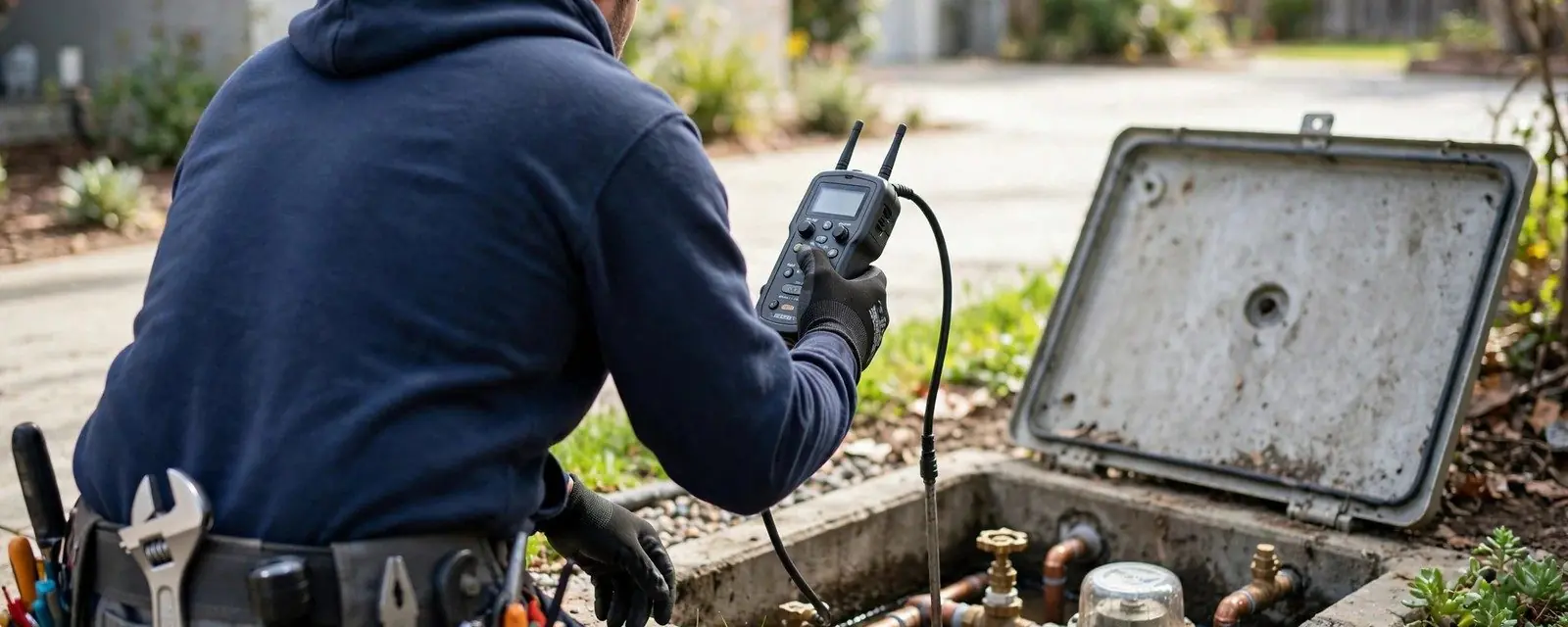
The most useful thing you can do before you call is a meter test. Turn off every fixture, read the meter, wait twenty minutes, and read it again.
What a leak detection visit includes
A visit starts with a conversation about what you have noticed, such as a high bill, a warm floor or a wet wall. The plumber then runs a meter test and a pressure test to narrow the search. Only after that does the equipment come out, so the fee covers expertise as much as tools.
Good detection leaves small holes. The plumber marks the leak on the surface and opens only the spot, so walls and floors stay mostly intact. That is the main reason to pay for detection instead of guessing and cutting.
| Factor | Lower cost when | Higher cost when |
|---|---|---|
| Where the leak is | It is at a visible fixture | It is under a slab or behind a finished wall |
| Testing needed | A meter test shows the answer | Several tests and tools are needed |
| Access | Crawl space or attic is open | Walls and floors block the path |
| Number of leaks | There is one leak | There are several |
| Report | You only need the finding | You need a written report for an insurer |
The tools behind the price
Plumbers use acoustic listening devices, thermal cameras, tracer gas and pressure testing. Each tool has a job. Listening equipment finds the sound of escaping water. A thermal camera shows a warm line from a hot water leak. Tracer gas helps when the sound is weak, and pressure testing isolates which section of pipe holds pressure.
The mix depends on what the first tests show. A plumber who starts with the most expensive method is guessing. One who starts with the meter and works down is saving you money.
Desert Hot Springs: permits and what counts as a repair
The City of Desert Hot Springs Building Division lists repairing leaks in pipes, valves and fixtures as exempt work. It treats replacing or relocating a water supply, sewer or drainage system as work that is not exempt. It also says emergency work can be permitted after the fact by applying within the next working business day.
That is useful when a leak turns into a repair. Finding the leak and fixing it in place are different from replacing a whole run of pipe. Confirm your case with the division at (760) 329-6411, and see our repiping page if the pipe itself needs replacing.
Repairs after detection follow the California Plumbing Code, which is based on the Uniform Plumbing Code (UPC), and a pressure test is the usual way to confirm the line is sound.
Want a clear price for your leak?
Call and we will explain the visit before it starts.
What to ask before you book
- Does the price include the pinpoint search, or only the test?
- Is the repair quoted separately, and when do I hear that number?
- Will you open only the spot where the leak is?
- Can you give a written summary for my insurer?
- Is there a charge if you cannot find the leak?
The last question matters. Some leaks are hard to find, and a plumber should tell you up front how that is handled. We explain the approach before we start and tell you if more testing is needed.
Insurance and documentation
Many homeowner policies cover sudden water damage but not a slow leak that went unnoticed. Some policies cover the cost of finding a leak when it causes covered damage. Ask your insurer before the visit, take photographs and keep every receipt and report.
If the leak turns out to be under the slab, read about slab leak repair for the options. For leaks outside the house, water line repair explains how a buried service line is found and fixed.
Is it worth paying for detection
A hidden leak can cost far more than the price of finding it. Water under a slab can lift floors and feed mold, and a leak between the meter and the house can run for months. If your meter keeps moving with everything off, find the leak. We also serve Palm Springs, and the service area page lists where we work.
What you can do before the plumber arrives
Helping the plumber saves time and money. Note when the bill went up, when you first heard water or saw a stain, and which fixtures are near it. Locate the main shutoff and the meter, and clear access to both. Take photos of any stains, with the date.
Also write down the age of the house and the pipe materials if you know them. A copper system, a PEX system and a galvanized system fail in different ways. This history helps the plumber choose the right tools and the right order of tests.
- Read the meter and note the number and the time
- Check each toilet with food coloring
- Look at hose bibs and irrigation valves for drips
- Check the water heater area for dampness
- Walk the yard for soft or green patches
It depends on where the leak is, the tests needed and the access. Call for a clear price before the visit starts. A meter test is the quickest and least expensive first step.
Yes. Detection and repair are different jobs, and we explain the repair price once we know where the leak is.
You can check the meter and look for wet spots, stains and sounds. Finding a leak in a wall or under a slab takes equipment.
It depends on the policy and the damage. Ask your insurer before the visit and keep all reports.
The Building Division lists leak repair as exempt, but replacing a supply, sewer or drainage system is not. Call (760) 329-6411 to confirm your case.