
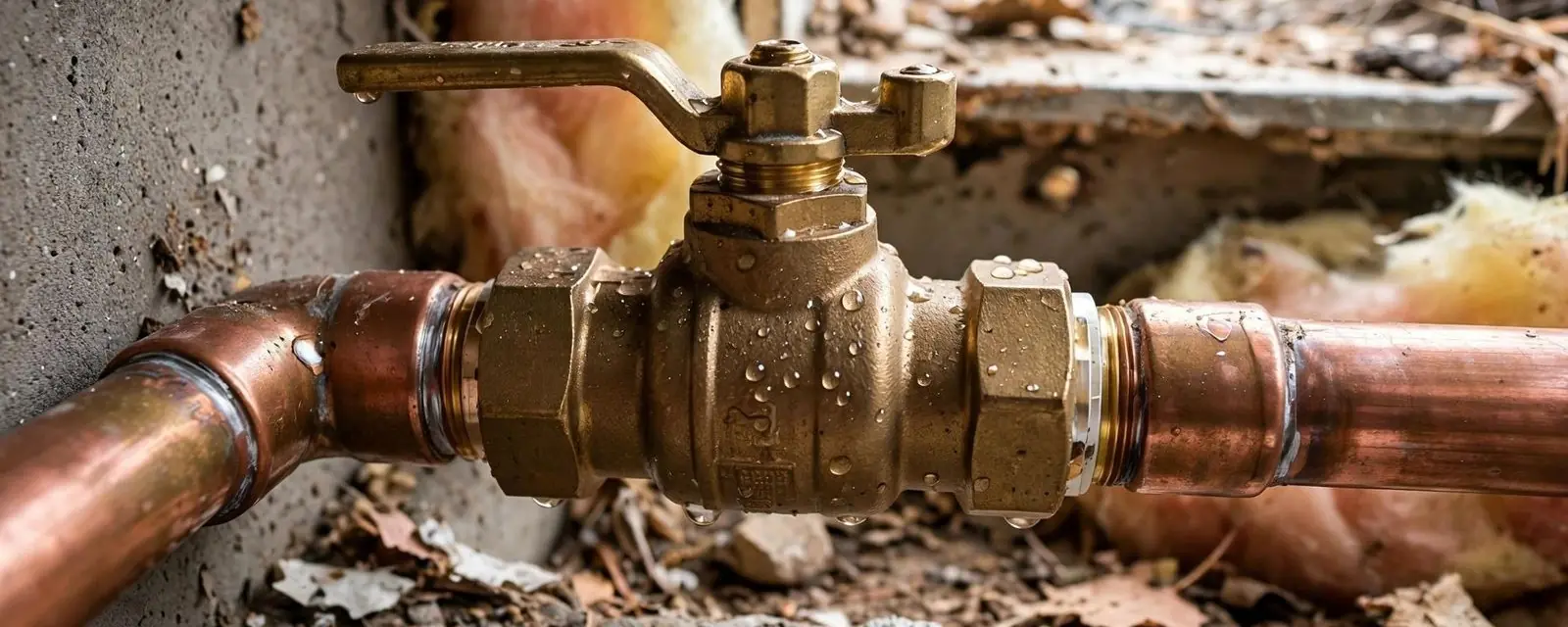
Before anything else, shut off the main water valve and open a faucet at the lowest point in the house to drain the line.
Choose the right cap
| Method | Tools | Best for |
|---|---|---|
| Push-fit cap | A pipe cutter and a deburring tool | Quick, temporary or permanent fixes in dry spots |
| Compression cap | Two adjustable wrenches | Spots where a torch is unsafe |
| Soldered cap | Torch, flux, solder, cloth | Permanent capped lines |
| Brazed cap | Torch and brazing rod | Gas lines and high pressure, which need a licensed pro |
Push-fit caps are convenient and widely used. They grip the pipe with a ring and seal with an o-ring. They are not a good fit on a corroded or out of round pipe, since the seal needs a clean surface. Always follow the maker instructions on insertion depth.
Prepare the pipe
Cut the pipe square
Use a pipe cutter, not a saw, and make a clean square cut past any damage.
Deburr inside and out
Remove the burr so the cap seats and the o-ring does not tear.
Clean to bright copper
Sand or use a fitting brush until the pipe shines, then wipe it dry.
Dry the line
Water in the pipe stops solder from flowing, so drain and dry the line before soldering.
The most common cause of a failed cap is a dirty or wet pipe end. Take time on the prep. If water keeps trickling out of the pipe, stuff a plug of bread into the line for a moment while you solder, a plumber trick that dissolves once water returns. Better still, make sure the valve upstream fully closes.
Soldering a cap, in short
Apply flux to the pipe end and inside the cap. Slide the cap on and heat the fitting, not the solder. When the flux sizzles, touch the solder to the joint and let it flow around. Wipe the joint with a damp rag, and let it cool without moving it. Keep a fire extinguisher or a bucket of water within reach, and put a flame shield behind the pipe.
If the pipe sits in a wall, a torch is a real fire hazard. In that case, a push-fit or compression cap is the safer choice, or a plumber should do the work. Never solder near gas lines or insulation that may burn.
Desert Hot Springs: dry wood, desert heat and permits
Desert Hot Springs gets very little rain and has hot, dry summers, so open flame inside a wall or an attic is a serious fire risk. If you are not sure the work area is safe for a torch, use a push-fit cap or call a plumber.
The City of Desert Hot Springs Building Division lists repairing leaks in pipes, valves or fixtures as exempt from permits, while replacing a concealed defective pipe is treated as new work needing a permit. Capping a pipe as a quick repair is usually a repair, but confirm your case at (760) 329-6411.
Copper tube is made to ASTM standards such as ASTM B88, and fittings and solder for drinking water must be lead free under the California Plumbing Code, which is based on the Uniform Plumbing Code (UPC).
Not sure about a torch near the wall?
Call. A plumber can cap or repair the pipe safely.
After the cap goes on
Test before you walk away
- Close all faucets and open the main valve slowly
- Watch the cap and nearby joints for drips for at least ten minutes
- Wipe the area dry and check again an hour later
- Look for a spreading wet spot on the wall or floor
- Check the meter with all fixtures off to confirm the leak is gone
If you find a drip, shut off the water, drain the line, and redo the joint. Do not tighten or reheat a wet joint. A cap on a leaking pipe is a temporary fix, and a pipe that needed capping may be a sign of wear elsewhere. If you see a pattern of leaks, our repiping page explains what a larger fix involves.
When to call a plumber instead
Call if the pipe is corroded, if the leak is inside a wall, if the shutoff will not close, or if you smell gas. A burst pipe needs fast action, and our burst pipe repair page explains what we do. We serve Palm Springs and the wider service area.
Capping a pipe as a permanent fix, and capping it for later
People cap a pipe for two reasons. One is to stop a leak until a full repair can be made. The other is to abandon a line for good, such as after removing a fixture. The method is the same, but the standard is different. A temporary cap should still be tested, and a permanent cap should be placed as close to the active line as possible.
A dead end with no flow can collect stale water and bacteria. If you are abandoning a line, cap it at the tee where it branches, not at the end of a long unused run. A plumber can trace the line and remove the unused section for you.
Yes. Push-fit and compression caps need no torch. Prepare the pipe carefully and follow the instructions on insertion depth.
Many makers rate them for permanent use when installed correctly on a clean, round pipe. Check the product rating.
Water in the line, a dirty pipe or too little heat are the usual causes. Drain, dry and clean the pipe again.
A simple repair is listed as exempt, but rules for new work differ. Call the Building Division at (760) 329-6411 to confirm.
Close the main valve. If it fails, close the meter valve if you have access, or call the water district and a plumber right away.